ship.energy

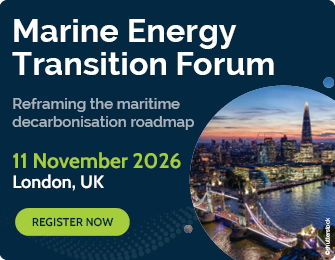
Marine Energy Transition Forum 2026

11 November - 11 November

Norton Rose Fulbright, London

Reframing the maritime decarbonisation roadmap: addressing fuel, technology and infrastructure bottlenecks

The Marine Energy Transition Forum returns to London in November 2026 with the aim of identifying the chokepoints in global maritime decarbonisation and developing solutions and strategies to overcome them.

130 days to go

Reframing the maritime decarbonisation roadmap: addressing fuel, technology and infrastructure bottlenecks

Programme details are updated regularly and are subject to change as new speakers are confirmed and themes developed.

If you feel you could make a significant contribution to the programme, please email Lesley Bankes-Hughes at [email protected] or call +44 1295 814455 to discuss this further.

Early Bird: £249 (ends 11 September)
Standard Price: £449

(Premium members: log in to unlock your 5% discount on the standard price to £426.55)

Register

8:30 am

Registration & Networking Coffee

9:00 am

Session 1 – The conditions for change: have regulators, policymakers and industry made the right call on the drivers for decarbonisation?

This session will consider how regulatory and industry levers for maritime’s decarbonisation are operating in practice. What is working and what requires a reappraisal? Topics up for discussion will include:

EU and national regulation (EU ETS, FuelEU Maritime, Emission Control Areas, the UK ETS)

  • Mechanisms such as mass balancing, contracts for difference
  • The EU’s new Industrial Maritime Strategy and Ports Strategy
  • Grants, subsidies, and public/private partnerships
TBC

Session 2 – Energy highs – and lows: a progress report on developing a multi-fuel pathway

Speakers in this session will consider the global new marine fuel supply chain – from production to delivery – and examine how it is taking shape and what are the challenges to its execution in terms of commercial resilience, fuel availability on a global and regional scale, fuel production at scale, and stakeholder and cross-sector collaboration. Specific focus areas will be:

  • Availability of investment for newbuilds and at key points in the development and scaling up of new fuel production
  • Risk-sharing – for supply and offtake
  • Aligning bunker supply volumes and infrastructure with shipping’s demand
  • Energy supply security
  • Workforce training
  • Mitigating the cost of new fuels
  • The role of green corridors, and cross-industry ‘knowledge hubs’ in accelerating decarbonisation
TBC

Networking Coffee Break

TBC

Session 3 – Choosing effective building blocks: putting tech to the test

The pace of technology development will be debated in this session – in relation to newbuild and also conventionally fuelled vessels already in the global fleet. Topics for discussion will include engine and fuel system technology, vessel optimisation and efficiency measures, retrofits – and financing technological innovation. Panellists will be drawn from across the maritime sector and will represent OEMs, as well as wind propulsion, battery, carbon capture, and digitalisation specialists. Discussions will centre on four key pillars:

  • Matching innovation timelines to wider market and regulatory progress on decarbonisation
  • Commercial risks in technology development – and opportunities for risk sharing
  • Realistic approaches to return on investment
  • The role of pilot projects – expectations versus outcomes
1:00 pm

Networking Lunch

2:00 pm

Session 4 – Growth potential: creating a supportive and competitive commercial environment for energy transition companies

This session will ask how expertise developed in other industry sectors is being applied to the decarbonisation of shipping and it will also look at the business climate for start-ups or more mature companies who are focused on delivering the sector’s energy transition, from a fuel, technology, or ancillary services perspective. The conversation will cover:

  • Funding and support for start-ups
  • Moving from proof of concept to commercial scale
  • Building workforce expertise
  • Accessing domestic and export markets
  • Choosing production locations
  • What comes next? Achieving scale through joint ventures, M&A, organic growth.
  • The tipping point – timescales for industry consolidation
TBC

Networking Coffee Break

TBC

Session 5 – Making the right call: ports as enablers for industry decarbonisation?

Ports are key stakeholders and, potentially, accelerators of shipping’s energy transition. They are developing strategies for the decarbonisation of their own working environment whilst accommodating market demand for the safe and efficient bunkering of new marine fuels, and, in some cases, establishing their individual profiles as import and export hubs for new energy commodities.

In this final session, port representatives will share their views on:

  • Deciding which new bunker fuels will be made available – large bunker hub capabilities versus fuel provision at small ports
  • Building new energy clusters – the role of terminal operators
  • Upskilling the workforce for the energy transition
  • The challenges of shore power supply
  • Managing public perception over the impact of new energy sources on the local environment
  • Harnessing the energy transition to build a competitive edge