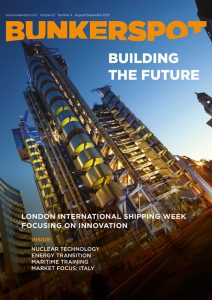

PANAMA’S SUPERHIGHWAY
DRIVING WORLD TRADE
Market Overview: Panama
The Panama Canal expansion project has opened up the waterway to 90% of the global LNG fleet, and the local bunker market is clearly reaping the benefits.
Commercial Issues
Much of the ‘noise’ in today’s bunker industry centres on the potential ramifications of the 2020 global sulphur cap. However, Michael Green suggests that there are other key issues in the marine fuels sector – good and bad – that should not be overlooked.
The exit of some well-known names from the bunker industry, the continuing woes of the shipping sector and the game-changing 2020 sulphur regulation have profoundly changed the marine fuels business. Lars Nielsen of BMS United Bunkers takes stock of the impact of these ‘shockwaves’ on bunker trading firms.
Risk Management
The 2020 global sulphur cap is generating many uncertainties, not least over fuel availability and pricing. As Dennis Lysemose Andersen of Global Risk Management explains, for fuel buyers looking to mitigate their price exposure there are strategies to be employed, but for those looking to hedge the as yet ‘unknown’ 0.5% sulphur fuels, the picture is less clear.
Legal Issues: OW Bunker
The collapse of OW Bunker in 2014 set in train a raft of court cases around the world. Paul Taylor of Hill Dickinson provides a concise and timely update on the (slow) progress of global litigation.
Legal Issues
Making a decision about how to comply with the 2020 global sulphur cap should be high on every shipowner’s ‘to do’ list. However, as Daniel Martin and Isabel Phillips of HFW point out, close attention should also be paid as to how the upcoming regulation may impact on charter party terms.
LNG
With LNG bunkering on an upward curve, Rhys Berry examines whether the current LNG bunker barge fleet will be able to meet future demand
The Port of Montréal is an active proponent of the use of marine LNG. Québec-based natural gas distribution company, Énergir, highlights some of the recent LNG initiatives at the port and across the province.
Exhaust Gas Cleaning Systems
The shipping industry’s appetite for scrubbing technology as a route to 2020 compliance has been more lukewarm than initially anticipated. Rhys Berry investigates the reasons for the apparent reticence in adopting emissions abatement solutions.
Fuel Quality
Murray Kirkwood of FOBAS takes a look at the cold flow properties of distillate bunkers and highlights the potential for operational issues.
Lubricants
As shipowners prepare to meet the challenge of the 2020 global sulphur cap, Charles Du Bois of Puma Energy highlights the importance of making informed decisions over the selection of lubricants.
Chevron explains how engine condition can be improved – and cost savings achieved – by moving from a lower base number to a higher number cylinder lubricant.
MEBC Focus
The key issues in the bunker industry were extensively discussed at the recent Middle East Bunkering Convention in Dubai. As Lesley Bankes-Hughes reports, participants were eager to debate the increasingly pressing concerns surrounding the introduction of the 2020 global sulphur cap.
CMA Focus
Getting to grips with 2020 was the focus of the bunker session at the recent CMA Shipping 2018 conference. Llewellyn Bankes-Hughes, who chaired the session, reviews some of the key talking points.