
Northern Lights: Norway Shows The Way
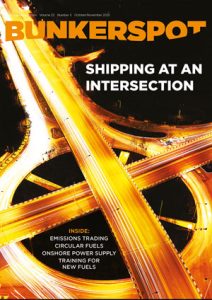
Inside:
GREEN SHIPPING STRATEGIES
ENERGY EFFICIENCY
MARINE LUBRICANTS
BIOFUELSTRAINING FOR NEW FUELS
Decarbonisation
Ariane Morrissey investigates what the shipping industry can learn from the experience of Norwegian shipowners, which seem to have a head start on the energy transition
Transparensea Fuels’ Margaret Kaigh Doyle reminds us that, while the IMO’s NZF has been paused for now, other Annex VI requirements are still in force
Port Strategies
Caya Hein explains how the MAGPIE project could offer a roadmap for European ports’ decarbonisation strategies
ESG
RightShip’s Jon Lane believes that efficiency, digitalisation and collaboration are the triple pillars supporting maritime decarbonisation
National Green Shipping Strategies
Joana Antunes of TecnoVeritas believes that Portugal’s National Strategy for Greener Shipping can serve as a testbed for maritime decarbonisation
Marine Lubricants
In conversation with Lesley Bankes-Hughes, TotalEnergies’ Stuart Fuller explains how an extensive two-year testing programme onboard the Switzer Embla Ice Class tug served to validate the use of Lubmarine’s Disola Long Life engine oil for modern high-performance marine engines
Wind Propulsion
OceanWings CEO Emmanuel Schalit tells Rhys Berry that the postponement of the IMO’s Net Zero Framework underscores the importance of wind propulsion
Biofuels
Spinergie’s Hugo Madeline, Bertrand Fatus and Sarah McLean explain how the finer points of regulatory compliance mean that switching from fossil fuels to ‘drop in’ bio alternatives is not as simple as it may at first appear
Energy Effciency
Sophia Parker of the World Bank Group makes the case for maximising ships’ energy efficiency to minimise their emissions and fuel costs
LNG Bunkering
Matt Richardson of Trelleborg Marine & Infrastructure looks at how the maritime industry can resolve the technical compatibility issues between LNG bunkering vessels, receiving ships and terminals
Offshore Service Vessels
Rising project costs and shifting forecasts are reshaping offshore wind’s growth trajectory. For vessel owners, writes Jon Inge Buli of Wärtsilä, the question is no longer which fuel will dominate, but whether power systems on board are ready for whatever comes next
Insurance
Insurance policies currently only cover the cost of replacing traditional fossil fuel-powered combustion engines on inland waterway vessels, even though regulations state new, more costly, low-emission engines must be fitted. Armand Lans of FDR | Risk & Insurance explains why this means that ship owners have been left dangerously exposed
IBIA
IBIA’s Chair Constantinos Capetanakis and Executive Director Alexander Prokopakis explain the reasoning behind the association’s new branding
Emissions Monitoring
As the shipping sector seeks certainty in the journey towards decarbonisation despite an unsettled regulatory landscape, Randi Østern of Kongsberg Maritime outlines why emissions monitoring is the key to future proofing vessels
IHM Regulation
Shailesh Singh of Normec Verifavia warns that IHM standards are slipping – and the shipping industry cannot afford a race to the bottom