
EXXONMOBIL/BUNKERSPOT 2020 DEBATE – NOR-SHIPPING
The 2020 global sulphur cap and shipping’s multi-fuel future
2020 SULPHUR REGULATIONS
How will shipowners choose to comply with the 2020 global sulphur mandate – and how will the refining sector respond? David St Amand of Navigistics Consulting and Martin Tallett of EnSys Energy broached these ‘uncertainties’ at Maritime Week Americas 2017 in Miami.
CREDIT ISSUES
Ongoing economic headwinds have compelled some shipping sectors to engage in a process of retrenchment and recalibration. However, Panos Panousis of Infospectrum argues that caution should be exercised in how terms such as ‘consolidation’ and ‘restructuring’ are being applied to the raft of changes underway in the industry.
LNG
Industry consultant Nigel Draffin provides a useful and informed gloss on the text of Singapore’s recent landmark Technical Reference (TR) 56 for LNG bunkering.
Singapore’s TR 56:2017 Technical Reference for LNG bunkering was launched in late April. Gabian Chew canvassed the views of members of the technical committee on the significance of TR 56 for the world’s largest bunkering port.
The European Union has ambitious plans to create a core network of ports which will provide access to LNG bunkering facilities. Rhys Berry canvassed the views of some of the ports involved.
SULPHUR ABATEMENT OPTIONS
At MEPC 70, the IMO decided to reduce the maximum sulphur content in exhaust gas from 3.5% to 0.5% from 2020. Dr Elizabeth Lindstad of Sintef Ocean provides an analysis of alternative abatement options and compares their respective cost efficiencies.
MASS FLOW METERS
The mandatory use of mass flow meters for heavy fuel oil deliveries in the Port of Singapore is aimed at increasing the transparency and efficiency of bunkering operations. Rhys Berry examines the effectiveness of the measure and asks whether more ports could follow suit.
VESSEL PERFORMANCE MONITORING
Ship performance monitoring is an oft publicised fleet management technique used to optimise engine performance and fuel consumption. However, as industry consultant Nigel Draffin explains, the core principles of this process can be traced back over many decades and are just as relevant in today’s shipping industry.
FUEL TREATMENT
Michael Banning from Innospec’s Marine Fuel Specialties division charts the development of its fuel additives, and outlines the properties of its new, independently tested, heavy fuel oil treatment, Octamar Complete.
FUEL TESTING
With reference to the recently published revised edition of the ISO 8217 marine fuel specification, Albert Leyson of Drew Marine looks at cloud point and cold filter plugging point testing requirements to determine the cold flow characteristics of distillate fuel.
UNMANNED SHIPPING
The pace of development in autonomous and remote-controlled shipping is intensifying, but much work remains to be done to create a robust and comprehensive regulatory framework to accommodate this cutting edge technology. Jonathan Goulding of Holman Fenwick Willan considers how autonomous systems may – or may not – fall within the scope of existing maritime conventions.
TRAINING & EDUCATION
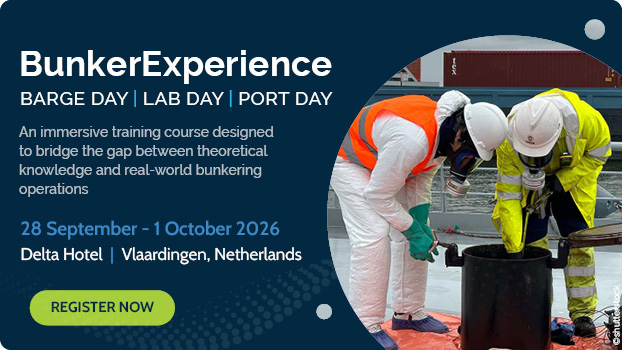
BunkerExperience is a unique hands-on training course that takes students out of the classroom and introduces them to the practical side of bunkering. Llewellyn Bankes-Hughes examines the popularity and longevity of the course that originated 12 years ago in the Netherlands and has now been rolled out in Panama and Singapore.