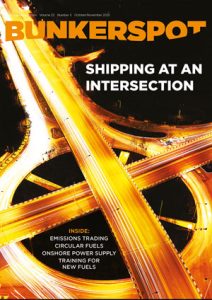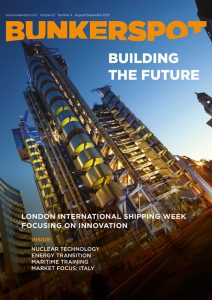
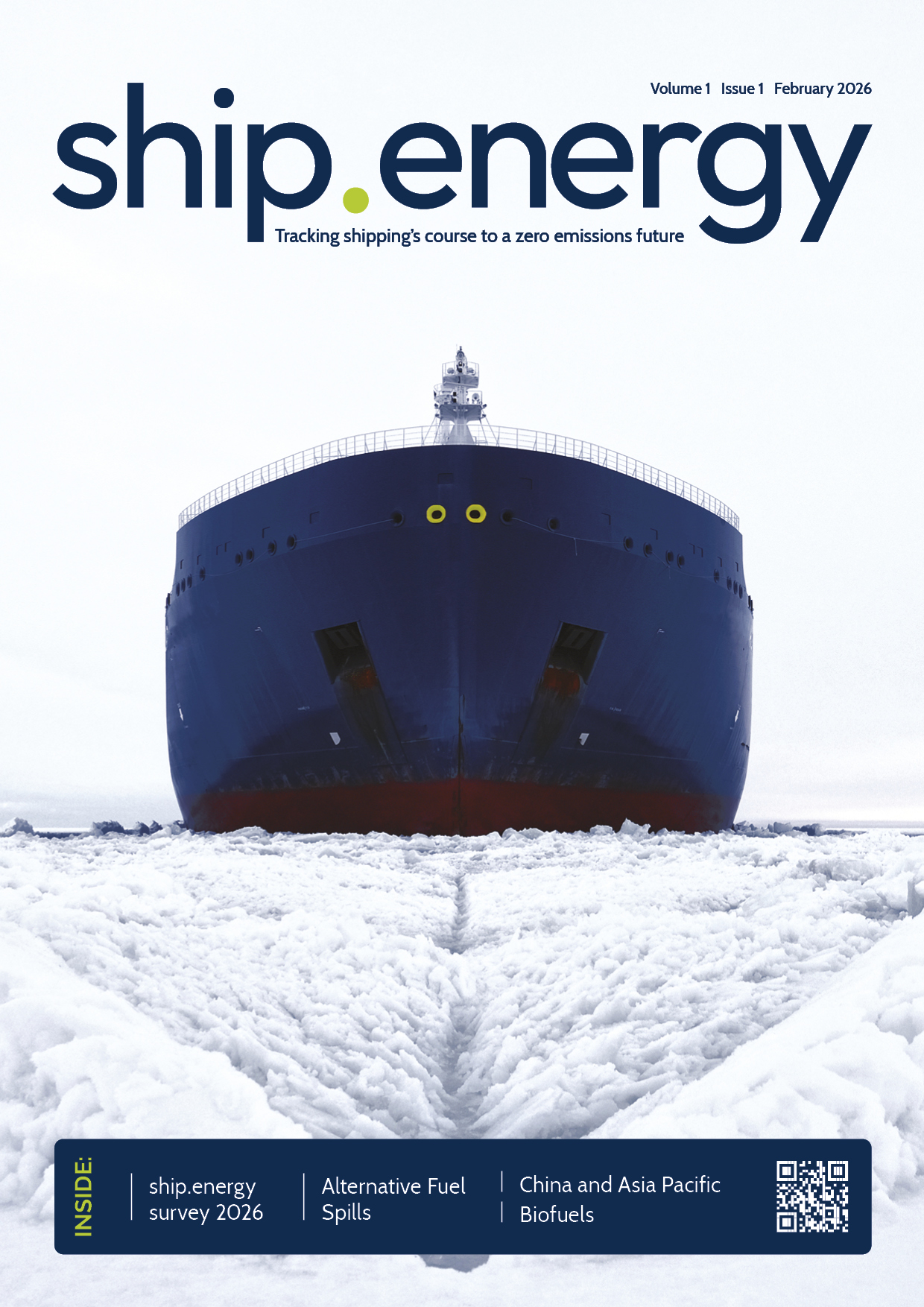
Inside:
ship.energy survey 2026
Alternative Fuel Spills
China and Asia Pacific
Biofuels
Features:
The ship.energy survey 2026
Introduction and contributors
The postponement of the Net-Zero Framework and the role of the European Union
Alternative fuels and energy sources for the marine sector
Quality, availability and pricing trends for conventional and bioblend fuels
Making the industry more accountable, with mass flow meters, licensing and digitalisation
The impact of global politics on shipping and bunkering
Decarbonisation
Representatives from the marine fuels industry and academia share their views with Ariane Morrissey on four ongoing debates that will define what the first global GHG pricing mechanism for international shipping will look like in practice – if adopted
Koen Heesbeen of STX Group believes that 2026 will be the ‘execution year’ for maritime | 74
Alex Caizergues of Syroco argues that shipping companies cannot afford to take a ‘wait-and-see’ approach to the energy transition
Delphine Kaczorowski of the SASHA Coalition argues that, in the wake of the IMO’s Net Zero Framework postponement, the European Union must now step up to take the lead on climate action
Market Focus: China & Asia Pacific
Susanna Lai of KPI OceanConnect looks at how China and other countries across the Asia Pacific region are gearing up for shipping’s transition to alternative fuels Uwe Krüger of CM Technologies believes that China’s shipping companies are turning engine and fuel monitoring into a strategic advantage
Alternative Fuel Spills
Erin Walton of West of England P&I Club looks at the challenges of managing spill risks and liability as the marine fuel mix continues to evolve
Sensor Monitoring
Shell Marine’s Marcus Schaerer explores how continuous sensor monitoring can help shipping operators improve vessel uptime, increase operational efficiency, and prevent unplanned downtime by filling in the blind spots between manual vessel inspections and sample-based oil analysis
Methanol Bunkering
Duncan Ross and Kim Rosello of Paratus & Partners ask if methanol has a real future at sea
LNG Bunkering
Steve Esau from SEA-LNG explains why he believes the methane pathway took off in 2025
Ports Focus: U.S.
HACC’s Allyson Browne examines how U.S. ports are delivering the maritime transition under pressure – executing on decarbonisation while the federal government takes aim at multilateral climate commitments
MITS
Tim Morris of Arup looks at how ‘Intelligent Transport Systems’ technology can help map the future of bunkering
Performance Optimisation
Opsealog’s Arnaud Dianoux explains how shipowners and charterers can use data-driven solutions to optimise performance, reduce costs, and enhance sustainability across global fleets
Maritime Security
Dave Cudbertson of OCIMF believes that ‘vessel hardening’ is central to maritime security preparedness