Building resilience in a changing world
A key hub for global shipping and marine fuels. The event will bring together bunker buyers, suppliers, traders, and other maritime professionals to discuss the industry’s most pressing issues.
18 May - 21 May
InterContinental Miramar, Panama
A key hub for global shipping and marine fuels. The event will bring together bunker buyers, suppliers, traders, and other maritime professionals to discuss the industry’s most pressing issues.
Ethanol as a Marine Fuel Course
As the shipping industry accelerates toward decarbonisation ambitions, attention is turning to scalable, lower-carbon fuel solutions that can integrate with existing infrastructure and engine technologies. Ethanol — already traded globally at scale and supported by established regulatory frameworks — has emerged as a serious candidate in the future marine fuel mix.
This course provides a comprehensive introduction to ethanol, from U.S. agricultural feedstocks and production pathways through to its practical application as a marine fuel. Participants will explore the land use debate, lifecycle emissions performance, global production volumes and supply chains, and the policy frameworks shaping ethanol markets, including the U.S. Renewable Fuel Standard (RFS).
Moving from fundamentals to maritime application, the programme examines OEM research into dual-fuel engine development, blending characteristics with methanol, fuel handling and safety considerations, and the role ethanol can play in meeting carbon reduction targets.
Designed for shipping companies, fuel suppliers, regulators, ports, financiers and maritime service providers, this course delivers both strategic context and practical insight into ethanol’s potential in the energy transition.
WHAT DELEGATES WILL GAIN:


Growth Energy & U.S. Grains & BioProducts Council
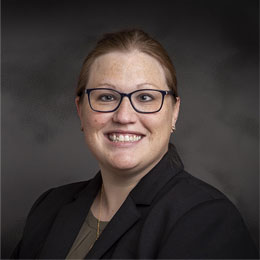
Director of Global Policy
Growth Energy
Emily Marthaler currently serves as the Director of Global Policy for Growth Energy, the largest ethanol trade association in the United States. Prior to joining Growth Energy in December 2024, Emily was with the U.S. Department of Agriculture (USDA) Foreign Agricultural Service (FAS) for over nine years, most recently serving as the Senior Trade Advisor for biofuels and bioenergy.
Emily led FAS’ biofuels and bioenergy trade and policy efforts both bilaterally and globally. Emily served as co-chair of the Global Bioenergy Partnership, represented the United States in the Global Biofuels Alliance, served as a U.S. expert to the International Civil Aviation Organization, and represented USDA in other negotiations and international engagements.
Prior to FAS, Emily was the deputy director of the Midwestern Governors Association where she spearheaded regional efforts that included increasing the use and development of biofuels and renewable energy as well as transitioning the electric transmission sector. Emily also led the development of governors’ recommendations on the Farm Bill, upholding the Renewable Fuels Standard, implementing E15, as well as working to develop a framework on a low-carbon fuel standard. Prior to that, Emily also worked for USDA Rural Development and the United States Senate. Emily has bachelor degrees in political science and economics and a master’s degree in political management from The George Washington University located in Washington, DC.
Steffen Mueller, University of Illinois Chicago (UIC) – Energy Resources Center
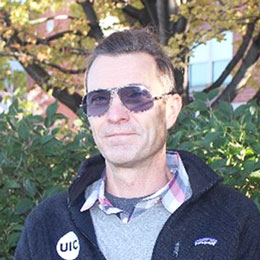
Associate Director, Energy Resources Center
University of Illinois Chicago
Dr. Mueller leads the Bioenergy and Clean Transportation Research Group at the University of Illinois at Chicago. Selected research activities focus on life cycle emissions analyses of different bioenergy and electric vehicle pathways as well as sustainability assessments of energy supply chains.
Dr. Mueller has published over 40 peer reviewed papers on life cycle analysis. Steffen served on the Expert Working Group on Land Use during the establishment of the California Low Carbon Fuel Standard.
In 2021 and 2022, he served on the National Academies of Sciences Committee on Life Cycle Analyses of Low-Carbon Transportation Fuels and since 2013 Steffen has been a Board member of International Sustainability and Carbon Certification (ISCC). Steffen holds a PhD in Energy Policy from the University of Illinois at Chicago, an MBA and a B.S. in Environmental Engineering.
Jennifer Aurandt-Pilgram, Marquis Energy
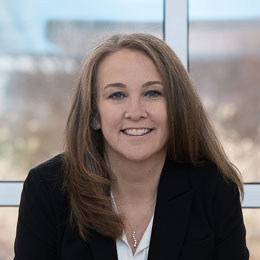
Vice President of Innovation
Marquis Energy
Dr. Jennifer Aurandt-Pilgrim is a scientist, innovator, and industry leader advancing the next generation of solutions from American agriculture. She serves as Vice President of Innovation at Marquis Energy, the largest dry-mill ethanol biorefinery in North America, where she leads the integration of carbon capture, utilization, and storage (CCUS), sustainable feedstock systems, and carbon dioxide conversion technology into the conventional ethanol platform, transforming a renewable fuel facility into a fully decarbonized bio-industrial complex.
Trained as a scientist, Dr. Aurandt-Pilgrim’s career spans the laboratory, the boardroom, and international policy forums. She holds a Ph.D. in Biological Chemistry from the University of Michigan and has dedicated her work to deploying scalable technologies that connect American farming systems with bioenergy innovation. Her leadership emphasizes “Now-Near-Next” Innovation strategies, accurate carbon accounting, and measurable global sustainability frameworks.
Dr. Aurandt-Pilgrim currently serves as Vice Chair of the United Nations International Civil Aviation Organization (ICAO) Observers Group through the Advanced Biofuels Association, where she contributes to international standards development for sustainable fuels. She is a recipient of the U.S. Department of Energy (DOE) Secretary of Energy Achievement Award for her collaborative work with the DOE Bioenergy Research Centers. In 2025 she was appointed to the DOE Biological and Environmental Research Advisory Committee (BERAC).
Doug Berven, POET
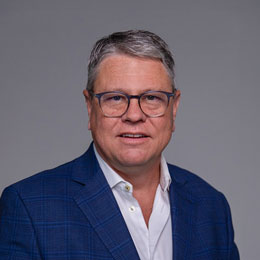
Vice President of Corporate Affairs
POET
Doug Berven joined POET in March 2003 and has served the organization in several roles since then. In his current role, Berven promotes the corporate objectives of POET, the importance of agriculture, and the benefits of ethanol domestically and internationally.
Berven sits on several of POET’s ethanol plant Boards of Directors, BIO’s Industrial and Environmental Section of Governing Board, and serves on several industry associated work groups and initiative committees. Berven also manages strategic corporate relations for POET, promotes state, regional and national policy objectives for the industry, and is a recognized authority on ethanol, renewable energy and agriculture.
Prior to joining POET, Berven held various roles in banking, real estate development and medical consulting. Berven received his Bachelor of Science degree in Business Administration from Augustana College in Sioux Falls, SD.
Trevor Mankini, Everllence
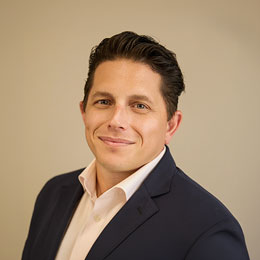
National Sales Manager
Everellence
Trevor Mankini is the National Sales Manager for Everllence PrimeServ Houston, formerly MAN-ES, bringing 20 years of maritime expertise to the North American market. A U.S. Coast Guard veteran and California Maritime Academy alumnus, Trevor’s career spans sailing, field service, project management, and business development.
Bob McCormick, National Renewable Energy Laboratory (NREL) – U.S. Department of Energy
Quaim Choudhury, American Bureau of Shipping (ABS)

Senior Managing Principal Engineer
American Bureau of Shipping (ABS)
Quaim Choudhury is a Senior Managing Principal Engineer in charge of alternative fuels, carbon capture and marine systems for the Energy Transition Team of the Americas Technology. He holds a B.S. in Naval Architecture and Marine Engineering and an M.S. in Mechanical Engineering, bringing over 28 years of maritime industry experience, including more than 20 years with ABS.
Quaim has deep expertise in onboard machinery, marine systems, propulsion technologies, and marine environmental considerations. His work spans traditional marine fuels as well as emerging alternative and future fuels, with substantial involvement in carbon capture technologies, CO₂ storage concepts, and the safe, efficient transport of liquefied CO₂ by ship.
In his current role leading energy transition-focused technical initiatives, Quaim serves as a key technical resource in advancing safer, more efficient, and sustainable maritime operations.
Marri Tejada, U.S. Grains & BioProducts Council (USGBC)
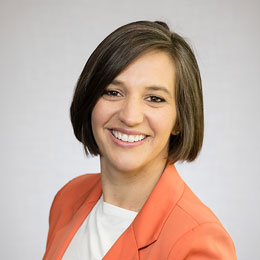
Regional Director for Latin America
U.S. Grains & BioProducts Council
Marri Tejada holds the position of Regional Director for Latin America at the U.S. Grains & BioProducts Council (USGBC), a non-profit organization dedicated to advancing the global utilization of U.S. barley, corn, sorghum, ethanol, and distiller’s dried grains with solubles (DDGS). In her role, Tejada oversees all Council operations in Latin America, covering Central and South America as well as the Caribbean.
Prior to assuming this regional leadership role, Tejada held various positions at the organization’s headquarters in Washington, DC, from 2008 to 2014, including serving as the director of communications. Before her tenure with the Council, Tejada gained valuable experience with the Minnesota Corn Growers Association.
Having roots in agriculture, Tejada’s journey began as the daughter of a seventh-generation corn, soy, and swine farmer in Southwest Minnesota. Beyond her professional responsibilities, she is an avid practitioner of Hapkido, finds joy in swimming and exercising, and enjoys leisure time exploring Panama with her husband and two young children.
The U.S. Grains & BioProducts Council develops export markets for U.S. barley, corn, sorghum and related products including distiller’s dried grains with solubles (DDGS) and ethanol. With full-time presence in 13 key markets and representatives in an additional 15 locations, the Council operates programs in more than 50 countries and the European Union. The Council believes exports are vital to global economic development and to U.S. agriculture’s profitability.
Detailed information about the Council and its programs is online at www.grains.org.