ship.energy

The Bunkering & Sustainability Forum – Tenerife 2026

16 March - 18 March

Centro Oceanográfico de Canarias, Santa Cruz de Tenerife

The inaugural Bunkering & Sustainability Forum is a new event focused on marine fuel strategies for islands and mid-sized ports. The event is designed to examine the current and future availability of traditional and alternative fuels in these ports and the infrastructure and maritime facilities needed to support them.

Ended 44 days ago

An Introduction to Alternative Fuels – Course Programme

Monday 16 March 2026: Full-day course

Venue: Escuela Politécnica Superior de Ingeniería, Sección de Náutica, Máquinas y Radioelectrónica Naval, Main Building. Vía Auxiliar Paso Alto, 2. CP: 38001 Santa Cruz de Tenerife

A one-day intensive course that looks at the potential benefits of using alternative fuels in the marine industry – and the reality of where the industry is now, and what practical steps will have to be taken to deliver the energy transition. The pros and cons of all the key alternative fuels will be weighed up, with a detailed focus on production, transportation, storage and delivery.

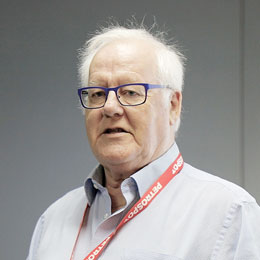
Taught by industry expert Nigel Draffin, this unique course on the future of bunkering will have plenty to offer both industry veterans and newcomers.


Please note:  The course will be delivered in English. El curso se impartirá en inglés.  

Please bring your own earbuds if you plan to use the translation app. Por favor, traiga sus propios auriculares si tiene previsto utilizar la aplicación de traducción.

Delegate Pass: £245

The price of this event includes lunch, refreshments and course materials.

Register

Translation sponsored by

Please download the PDF for instructions on installing the translation app and where to find it.  Por favor, descargue el PDF para ver las instrucciones sobre cómo instalar la aplicación de traducción y dónde encontrarla.

8:30 am

Arrivals

8:45 am

Welcome & Introductions

9:00 am

Alternative Fuels

  • What are Alternative fuels?
  • What is the menu for Alternative fuels?
  • Gaseous fuels
  • Liquid fuels
  • Objectives
  • Principal methods
  • A word about GHG

Moderator

9:40 am

Reality

  • Ideal versus reality
  • Practicality
  • Safety:
  • Comparison (DNV – SEA LNG report 2019)
  • Emissions
  • Techniques for reducing emissions
  • Alternative fuel production issues
  • Expected costs
  • Potential regulatory actions to encourage use of alternative fuels
10:00 am

Coffee Break

10:20 am

The Fuels

  • Categorizing the fuels
  • Individual fuel assessment
  • LNG
  • LPG
  • Methanol
  • Bio diesel
  • Bio diesel (FAME)
  • FAME and fuel standards
  • Bio diesel (UCOME)
  • Bio diesel (HVO)
  • Ammonia
  • Hydrogen
  • Summary of properties
11:10 am

Uptake

  • Which option is winning just now 1
  • Which option is winning just now 2
  • Which option is winning just now 3
  • Which option is winning just now 4
  • Which option is winning – summary
11:25 am

Production

  • Production issues – EGCS
  • Production issues – LNG
  • Production issues – LPG
  • Production issues – Methanol
  • Production issues – Bio diesel
  • Production – Bio diesel emissions
  • Production issues – Batteries
  • Production issues – Ammonia & Hydrogen
  • Which option is winning – summary
11:45 am

Transport and distribution

  • Transport and distribution – EGCS
  • Transport and distribution – LPG
  • Transport and distribution – Methanol
  • Transport and distribution – Bio diesel
  • Transport and distribution – Ammonia & Hydrogen
  • Suiso Frontier Liquid Hydrogen carrier
12:05 pm

Delivery

  • Delivery principles
  • Delivery hazards
  • Delivery – LNG
  • Delivery – LPG
  • Delivery – Methanol
  • Delivery – Bio diesel
  • Delivery – Ammonia & Hydrogen
12:25 pm

Regulations

  •  Alternative fuels – Regulations
  • Regulation
  • Guidance
  • Key restrictions
  • Regulations – LNG
  • Regulations – LPG
  • Regulations – Methanol
  • Regulation – Bio diesel
  • More on Bio diesel
  • Regulation – Ammonia & Hydrogen
1:25 pm

Lunch Break

2:25 pm

Storage

  • Storage for LNG
  • LNG tank types
  • LNG boil off gas
  • Venting LNG
  • LPG storage
  • LPG handling
  • Methanol storage
  • Bio diesel storage
  • Ammonia storage
  • Hydrogen storage
  • Space to store and handle fuel
2:55 pm

Quantity and Quality

  • Quantity and Quality
  • Measuring quantity
  • Measuring quality
  • Gaseous fuels and vapour return
  • Tank volume measurement issues
  • Volume correction factors
  • Weight correction factors
  • Emission factors
3:20 pm

Coffee Break

3:50 pm

Synthetic and Bio fuels

  • Categorising the fuels
  • Synthetic fuels
  • Bio LNG
  • Bio LPG
  • Bio Methanol
4:10 pm

Economics

  • Looking at the costs
  • Extra capital costs
  • Fuel costs
  • Transport, distribution, storage and delivery
  • Taxes and levies
  • Alternative fuels – fuel oil equivalent prices
  • LNG price
  • LNG price determination
  • Methanol
  • Bio diesel
  • Ammonia
  • Hydrogen
  • Comparison with liquid petroleum fuels
4:45 pm

Uptake

  • Which option is winning – summary
  • The next 5 years
  • 2030 to 2040
  • Ammonia
  • Hydrogen
  • Which option is winning just now
5:10 pm

Certificates and Final Remarks

5:20 pm

End of Course